

A hairline is the frame of the face. Remove it, shift it, or place it badly, and every other feature seems to change with it. People rarely notice a well-designed hairline because it simply looks natural, yet almost everyone notices a poorly designed one within seconds. That quiet difference between invisible and obvious is the whole reason hairline design has become a specialized skill. For anyone considering Hair Transplant in Islamabad understanding how a hairline is planned and rebuilt is the first step toward a result that looks like it was always yours.
Why the Hairline Matters More Than Hair Count?
Many patients arrive asking how many grafts they will receive. Experienced surgeons often steer the conversation toward a different question: where those grafts will be placed. A thousand grafts positioned with artistry can look better than three thousand placed carelessly. The front of the scalp is the most visible zone, so it demands the most precision, while the crown and mid-scalp can tolerate a gentler density.A natural hairline is never a straight line. It is slightly irregular, with tiny clusters and single hairs forming a soft, uneven border. Surgeons call this the transition zone. When it is reproduced faithfully, the eye cannot find a clear edge, and the restored area blends into the surrounding hair.
The Anatomy of a Natural Hairline
A well-planned hairline usually includes several features working together.
The Frontal Border
The very front edge uses the finest single-hair grafts, usually those with one strand. These produce the soft, feathered look found in natural hairlines. Placing thicker multi-hair grafts here creates a pluggy, artificial appearance.
The Temporal Points
Temple areas sit on either side of the forehead and often recede first in men. Rebuilding them thoughtfully restores facial balance, but they must match the person's age and pattern. Over-aggressive temple reconstruction on a mature face tends to look unnatural.
The Mid-Frontal Zone
Behind the border sits the zone where density increases gradually. Here, grafts containing two or three hairs are placed to create fullness without harsh contrast.
Direction, Angle and Curl
Hair grows at specific angles and directions that change across the scalp. Matching these details is crucial. Hair placed against the natural direction will stand up awkwardly, no matter how dense it is.
How Hairlines Are Designed Before Surgery?
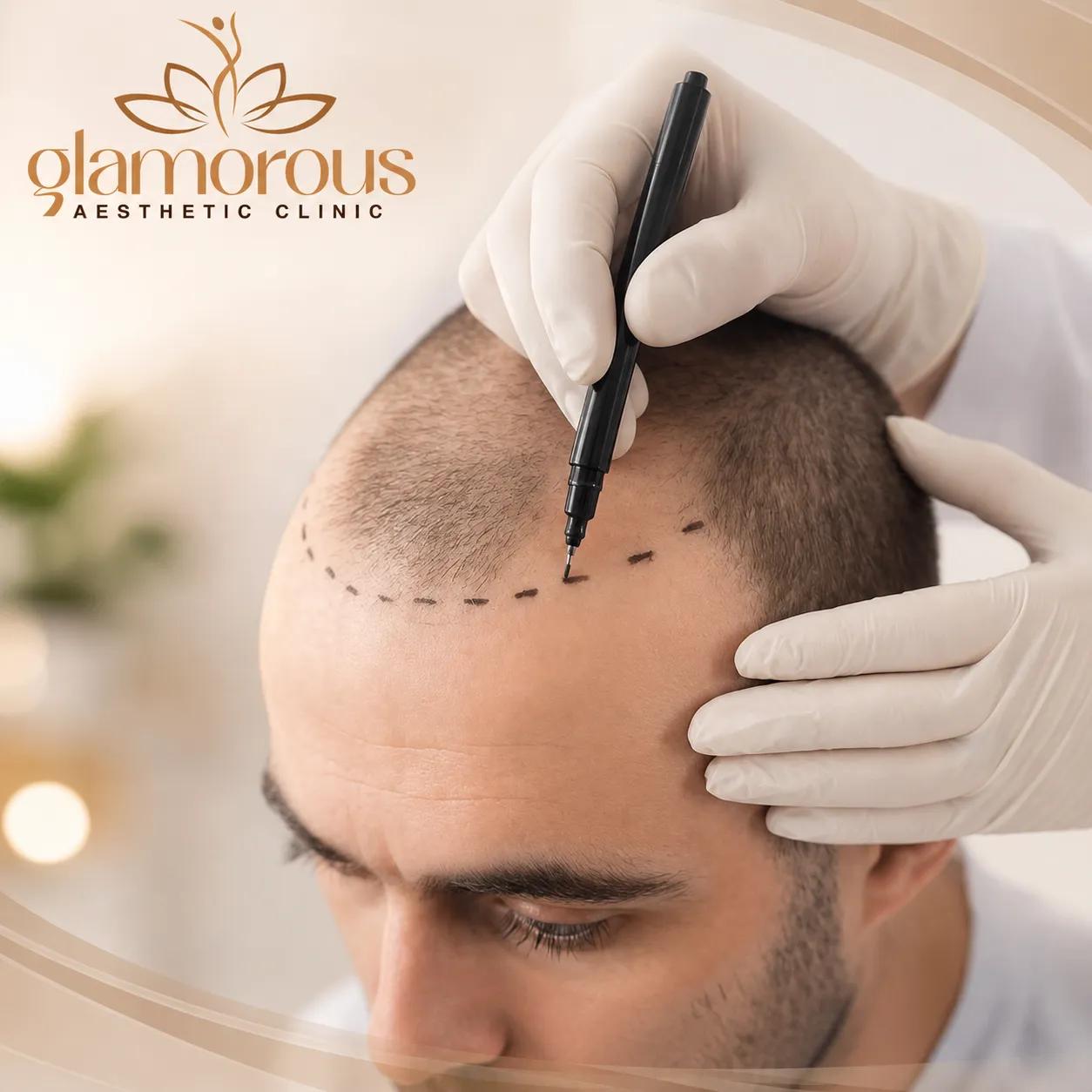
Good design begins long before any incision. The surgeon studies the shape of the forehead, the width of the face, the position of the eyebrows, and the patient's age. A common starting guide measures the distance from the eyebrows to the planned hairline, typically around seven to nine centimeters, though this varies with each face.The surgeon then marks the proposed line directly on the scalp. Patients are encouraged to look in a mirror, discuss the shape, and approve it before the procedure starts. This conversation matters because a hairline that suits a twenty-year-old may look strange on a forty-year-old. Wise planning accounts for future hair loss, since the natural pattern of thinning may continue. Placing the line too low in a young patient can leave an isolated island of hair years later as surrounding native hair recedes.
Understanding Donor Hair and Its Limits
Restoration depends on a finite resource. Hair taken from the back and sides of the scalp is generally resistant to the hormone responsible for pattern baldness, which is why it continues to grow after relocation. However, the supply is limited, and it must be spent wisely.A surgeon evaluates donor density, hair thickness, curl, and color contrast with the skin. Thick, coarse, or wavy hair covers more area than fine, straight hair. Because supply is limited, planning must prioritize the visible front rather than spreading grafts thinly across the entire scalp.
Common Techniques Used for Restoration
Two principal methods dominate modern practice.
Follicular unit extraction involves removing individual follicular units one at a time using a tiny punch tool. It leaves small dot-like marks that heal into barely visible spots, which suits people who prefer to wear their hair short.Follicular unit transplantation involves removing a thin strip of scalp, dissecting it into grafts under magnification, and implanting them. It can yield a large number of grafts in a single session and leaves a fine linear scar that is usually concealed by surrounding hair.Neither method is universally better. The right choice depends on the amount of coverage needed, the patient's hairstyle preference, and the surgeon's recommendation after examination.
Preparing for the Procedure
Preparation is straightforward but important. Patients are usually advised to avoid blood-thinning substances, limit alcohol and smoking beforehand, and follow instructions about medications and supplements. Eating well and sleeping properly help the body heal. On the day itself, the scalp is numbed with local anesthetic, so the procedure is generally comfortable, and most people remain awake.
Choosing the Right Clinic and Surgeon
The surgeon's skill and personal involvement matter more than marketing. Ask who will plan the hairline, who will perform the extraction, and who will handle implantation. Review before-and-after photographs showing results from varied angles, and look for consistency rather than a few exceptional cases.Confirm that the clinic is licensed, maintains sterile conditions, and provides clear follow-up care. Be cautious of unusually low prices, guaranteed results, or pressure to decide quickly. A good clinic explains risks openly, including temporary shedding, infection, scarring, and uneven growth.
Conclusion
Professional hairline design is a blend of medical knowledge and artistic judgment. A convincing result depends on the irregular, soft frontal border, thoughtful temple placement, correct angles, and a density that builds gradually rather than abruptly. Equally important are careful donor management, honest candidate selection, and planning that anticipates future hair loss. By choosing a qualified surgeon, understanding the recovery timeline, and maintaining realistic expectations, patients can achieve a hairline that looks natural today and continues to look right for years to come.
Read More :
http://banya.wolf-stroi.ru/articles/53735-hair-transplant-in-islamabad-at-glamorous-aesthetic-clinic.html